
Reader Intent
Start with the Question Your Reader Has
Define what the reader should understand or do after reading. Build the outline around that goal, not a list of loosely related keywords.
Try Now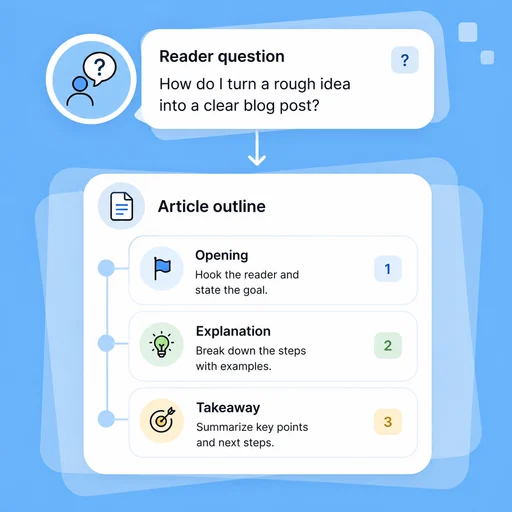
Give MiniMax Code a topic, a reader, and your source material. Develop an outline, write a focused draft, and refine the voice without losing your point of view.
Choose an example or describe your task, then continue in MiniMax Code.
Sample prompts
Illustrative article concepts show how different audiences call for different structures, voices, and visual treatments.
Focus the brief, develop the work, and review the details that matter for this task.
Reader Intent
Define what the reader should understand or do after reading. Build the outline around that goal, not a list of loosely related keywords.
Try NowSource-Led Writing
Use interviews, product notes, examples, and verified sources to make the article specific. Keep missing facts visible instead of filling them with confident guesses.
Try Now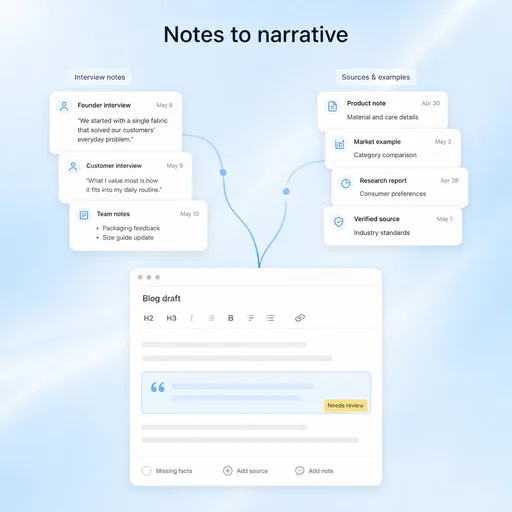
Editorial Revision
Compare introductions, tighten transitions, and remove repetition. Keep terminology and tone aligned with your editorial guidelines.
Try Now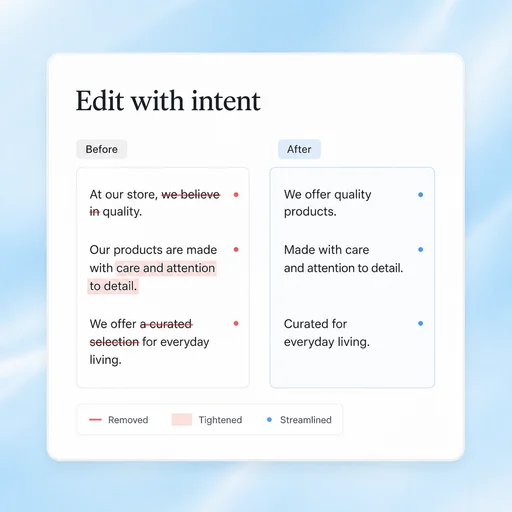
A comparison of working approaches, not a measured performance claim. Review the output before using it.
Start with the right inputs and keep a human review before the final handoff.
Describe the topic, audience, angle, desired length, and what the article should help readers achieve.
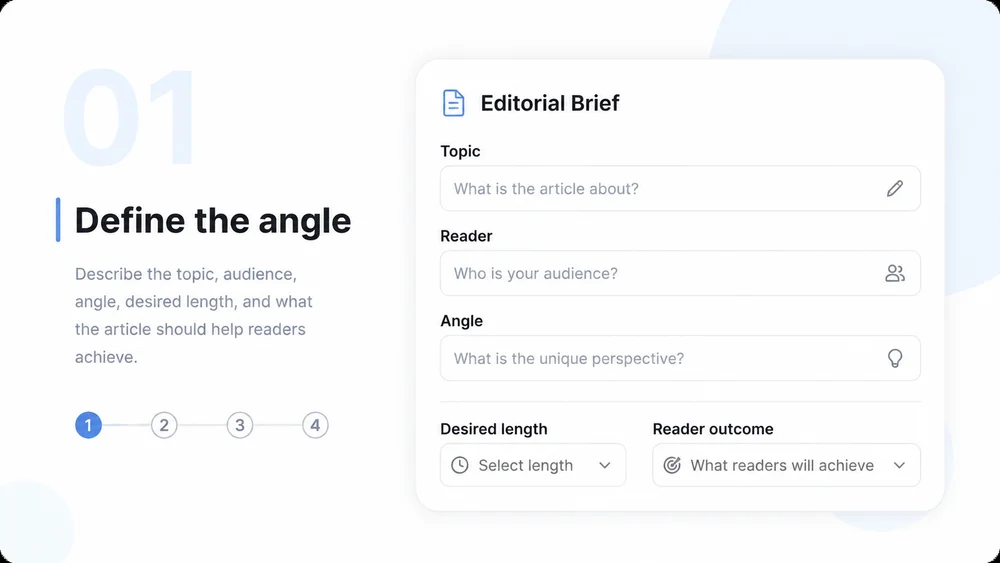
Provide original observations, reference material, approved product details, and any phrases or claims to avoid.
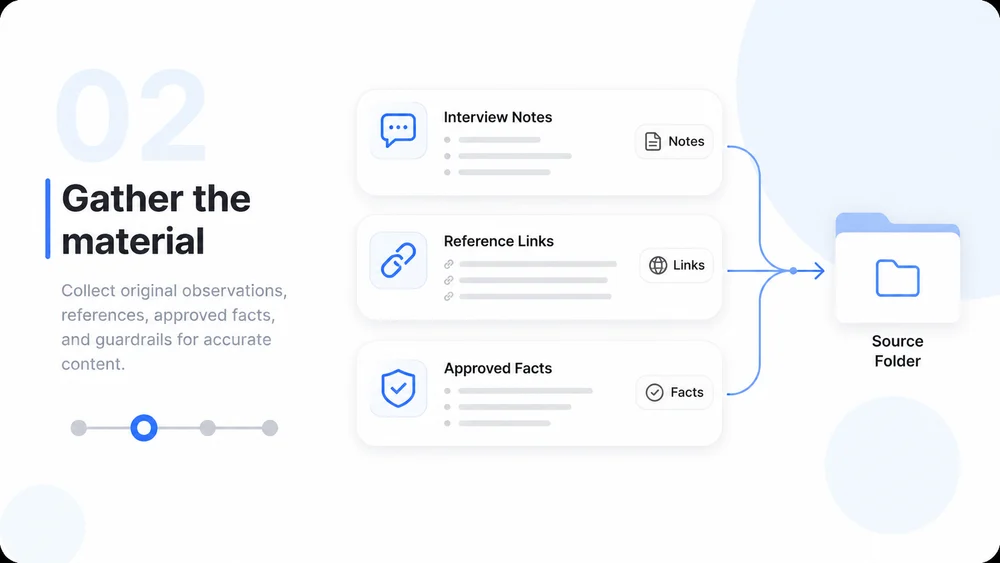
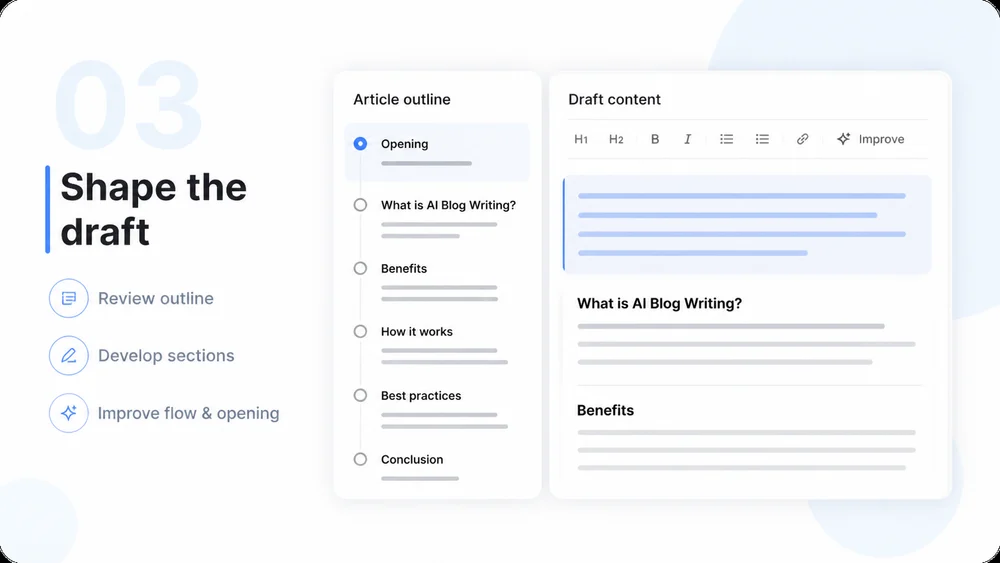
Review the outline, develop the sections, and improve examples, transitions, and the opening paragraph.
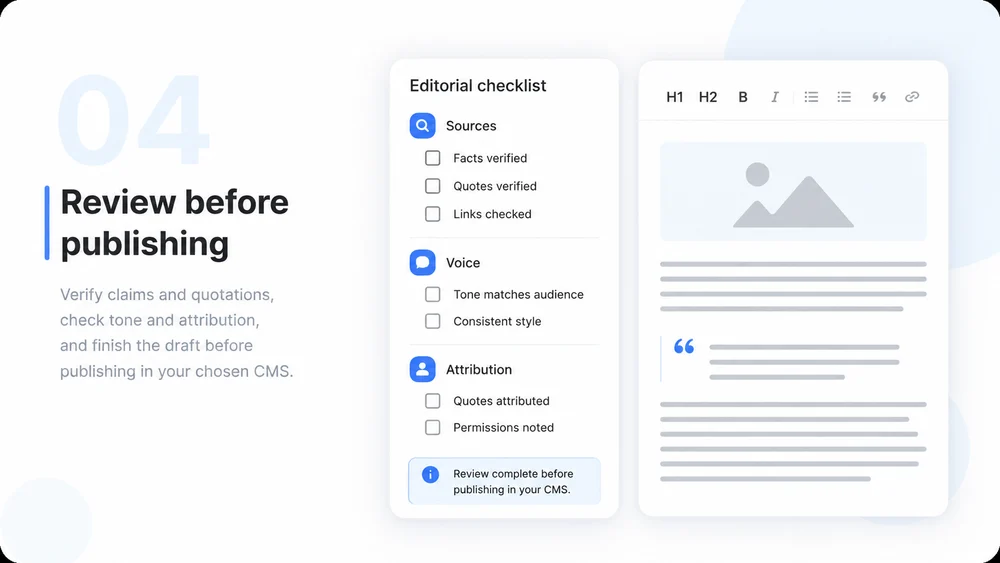
Verify claims and quotations, check tone and attribution, and finish the draft before publishing in your chosen CMS.
Practical answers about inputs, scope, review, and where the work happens.