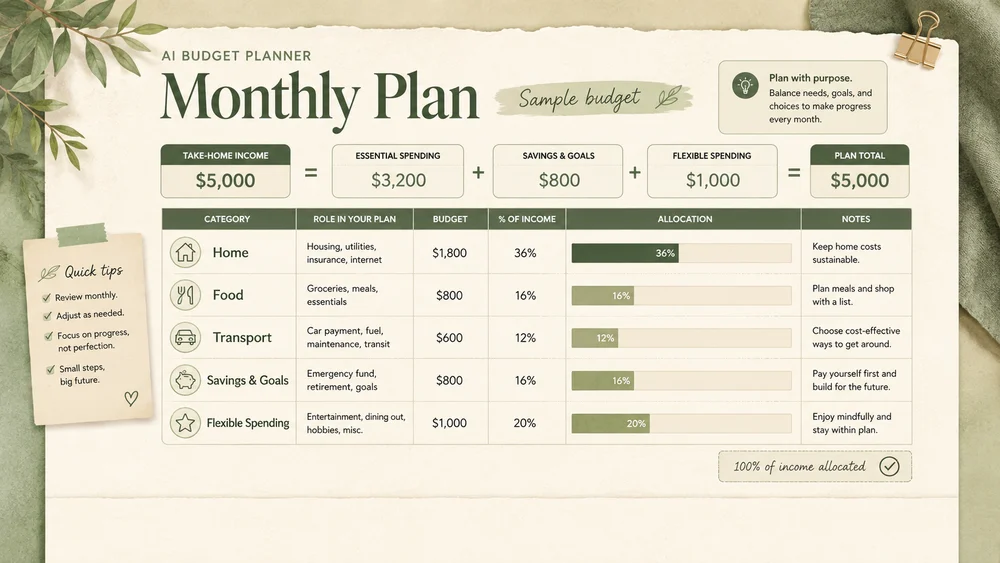
Expense Structure
Separate Recurring Costs from One-Offs
Group income and spending by category and timing. Surface irregular bills before they disappear inside an average monthly number.
Try Now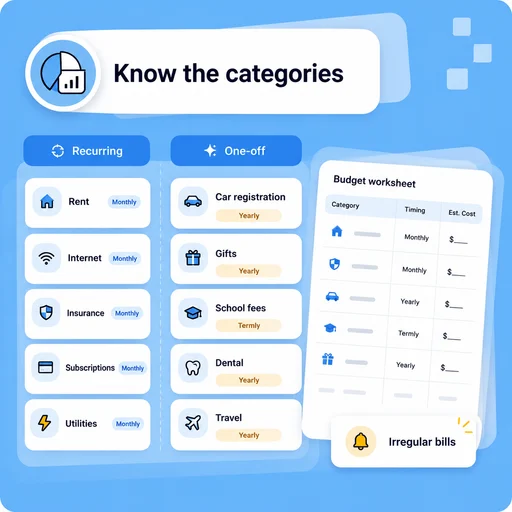
Turn your income, recurring costs, and goals into a budget you can understand. Explore tradeoffs and keep estimates separate from confirmed amounts.
Choose an example or describe your task, then continue in MiniMax Code.
Sample prompts
Illustrative planning formats show how to organize different needs. Sample amounts are fictional and are not financial recommendations.
Focus the brief, develop the work, and review the details that matter for this task.
Expense Structure
Group income and spending by category and timing. Surface irregular bills before they disappear inside an average monthly number.
Try NowScenario Planning
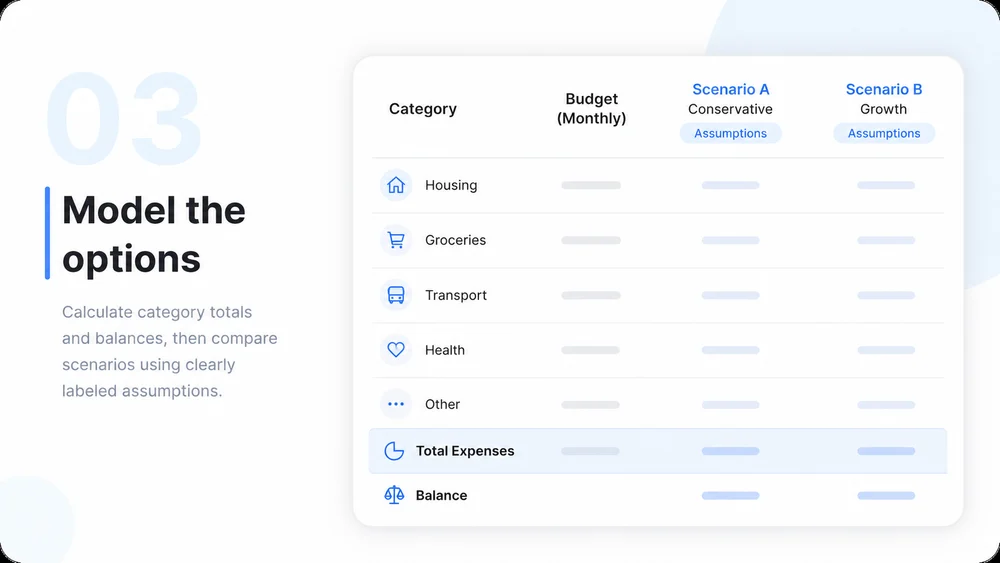
Compare a few explicitly named scenarios, such as lower income or a different guest count. Keep the inputs and their effect on the balance visible.
Try Now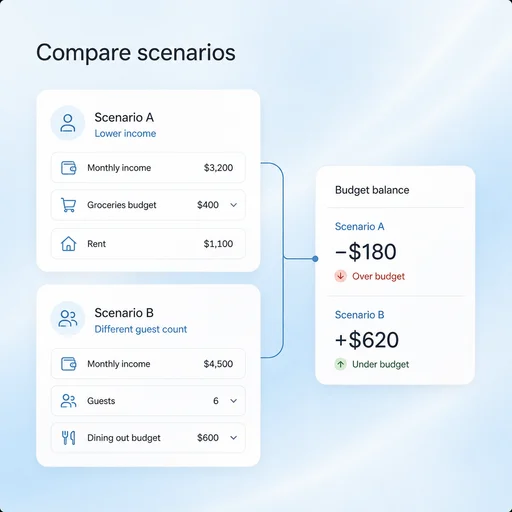
Practical Review
Keep estimates, confirmed amounts, and unresolved questions distinct. Review your budget when circumstances or source prices change.
Try Now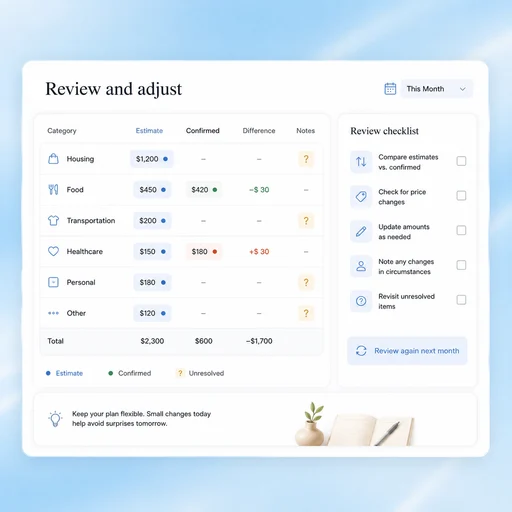
A comparison of working approaches, not a measured performance claim. Review the output before using it.
Start with the right inputs and keep a human review before the final handoff.
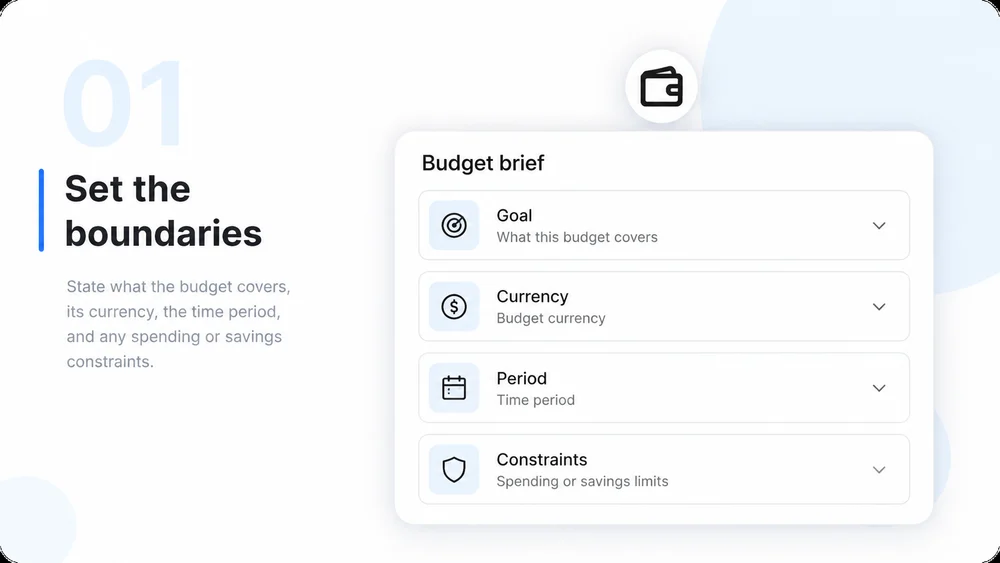
State what the budget covers, its currency, the time period, and any spending or savings constraints.
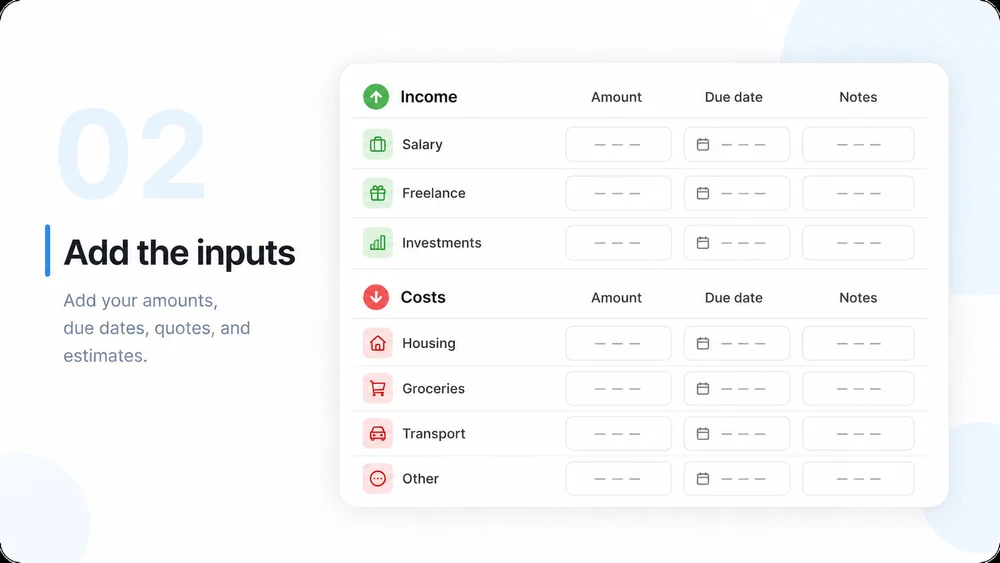
Add your amounts, due dates, quotes, and estimates. Remove account numbers or other details the task does not need.
Calculate category totals and balances, then compare scenarios using clearly labeled assumptions.
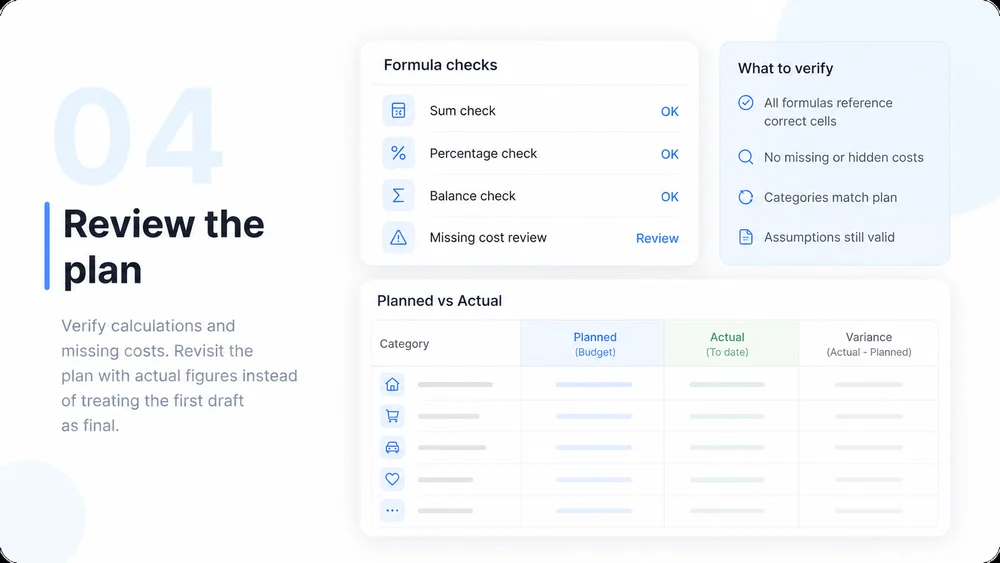
Verify calculations and missing costs. Revisit the plan with actual figures instead of treating the first draft as final.
Practical answers about inputs, scope, review, and where the work happens.