Decision Scope
Ask a Question the Evidence Can Answer
Define the market, geography, audience, time window, and decision criteria before comparing sources. Keep broad curiosity separate from the business choice.
Try Now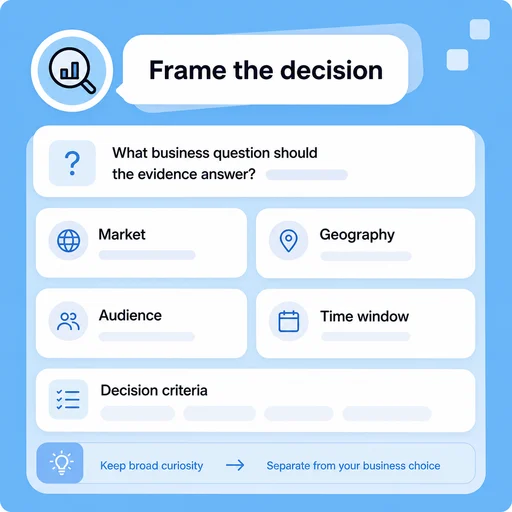
Frame a business decision, compare the available market evidence, and identify what still needs validation. Keep competitor facts, customer signals, and assumptions easy to distinguish.
Choose an example or describe your task, then continue in MiniMax Code.
Sample prompts
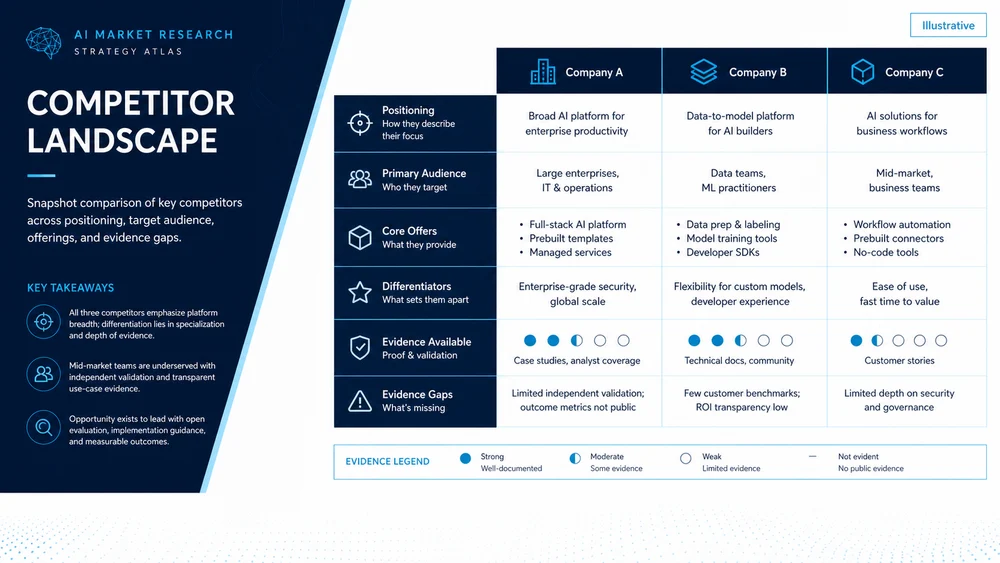
Illustrative research briefs show decision-focused formats. Charts and example companies are hypothetical, not live market intelligence or investment recommendations.
Focus the brief, develop the work, and review the details that matter for this task.
Decision Scope
Define the market, geography, audience, time window, and decision criteria before comparing sources. Keep broad curiosity separate from the business choice.
Try NowComparable Evidence
Use consistent definitions for competitors, pricing periods, and customer segments. Keep publication dates and source limitations beside the findings.
Try Now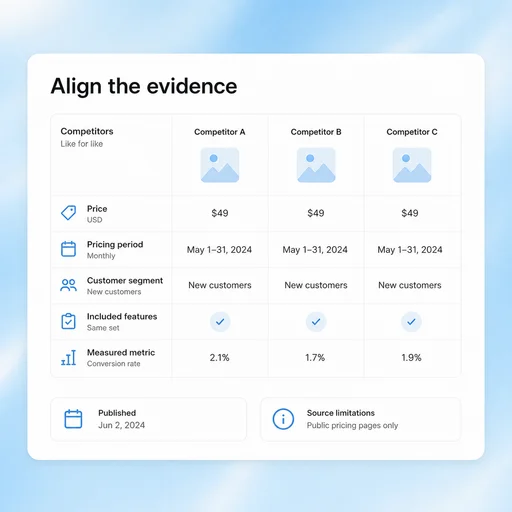
Validation Priorities
Separate observations, interpretations, and open questions. Identify the interviews, tests, or data needed before making a larger commitment.
Try Now
A comparison of working approaches, not a measured performance claim. Review the output before using it.
Start with the right inputs and keep a human review before the final handoff.
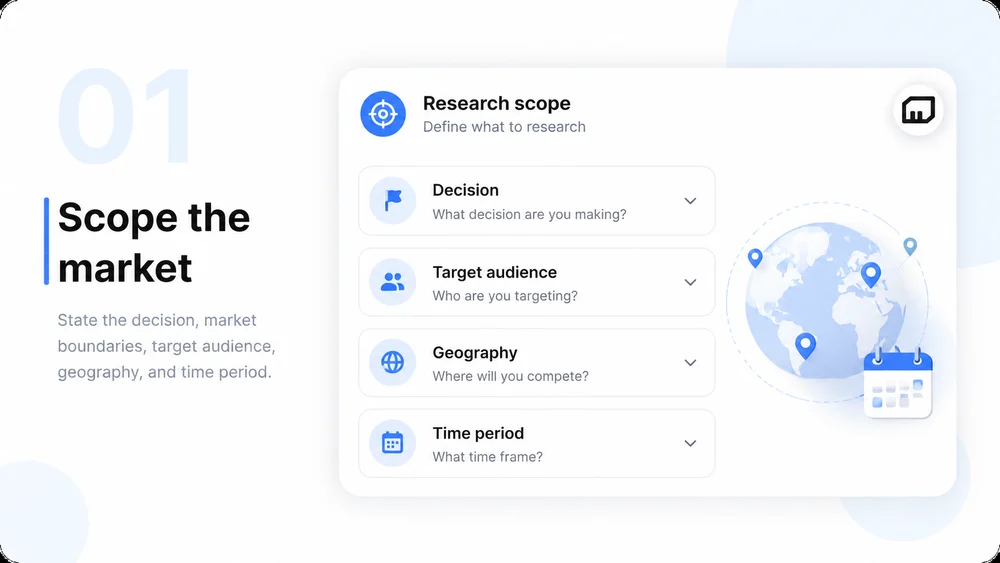
State the decision, market boundaries, target audience, geography, and time period.
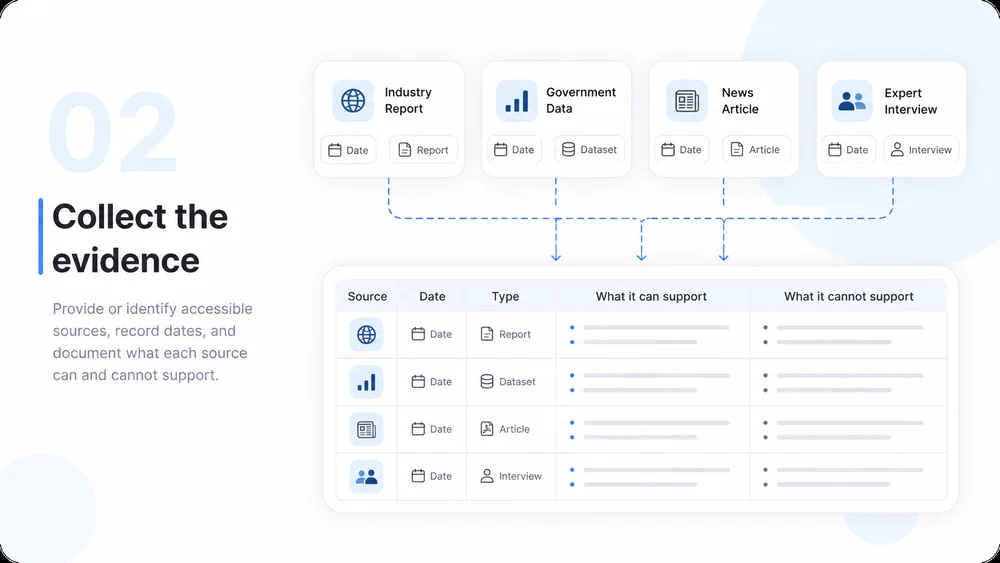
Provide or identify accessible sources, record dates, and document what each source can and cannot support.
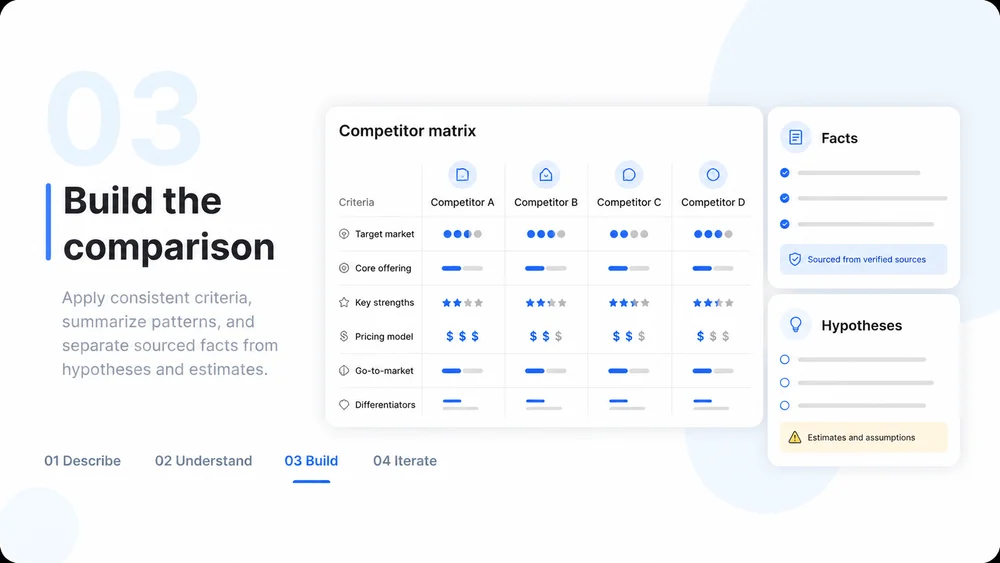
Apply consistent criteria, summarize patterns, and separate sourced facts from hypotheses and estimates.
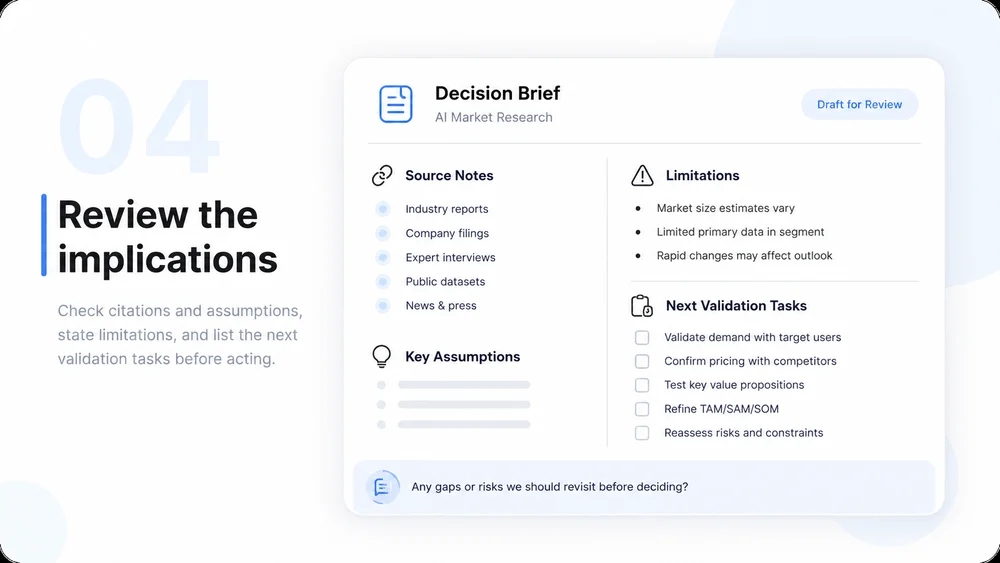
Check citations and assumptions, state limitations, and list the next validation tasks before acting.
Practical answers about inputs, scope, review, and where the work happens.