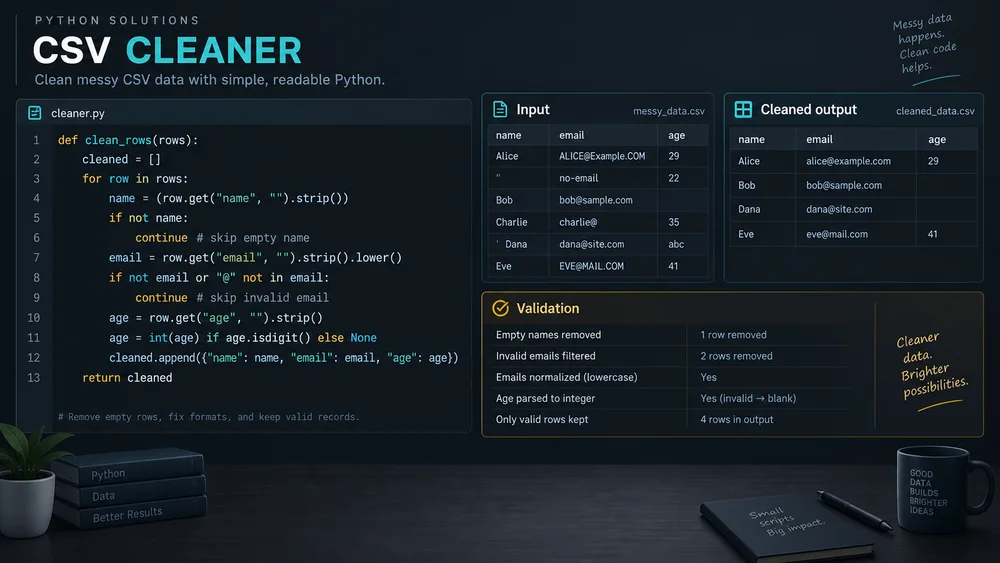
Task Definition
Make Inputs and Outputs Explicit
State the data shape, file rules, expected result, and failure cases. Clear constraints help turn a broad request into an implementation you can evaluate.
Try Now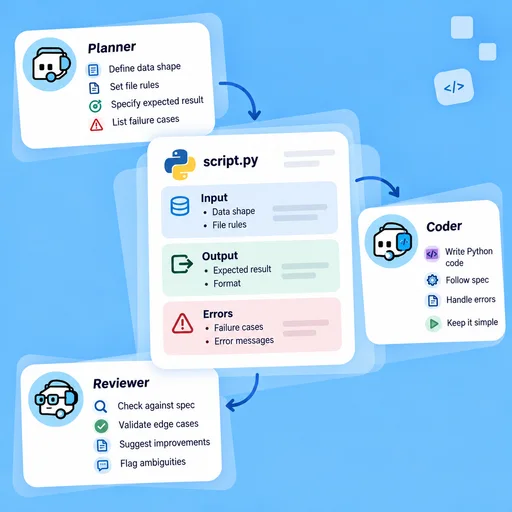
Describe the input, expected output, and constraints of your Python task. MiniMax Code helps draft the implementation, explain its choices, and prepare tests you can run in your environment.
Choose an example or describe your task, then continue in MiniMax Code.
Sample prompts
Illustrative code-workspace concepts show practical scripts, not proof of execution, benchmarks, or production readiness.
Plan the brief, develop the work, and review the details with AI Python Code Generator.
Task Definition
State the data shape, file rules, expected result, and failure cases. Clear constraints help turn a broad request into an implementation you can evaluate.
Try NowImplementation
Ask for readable functions, dependency notes, run commands, and explanations of important choices. Use your actual environment and version constraints rather than assuming every library is available.
Try Now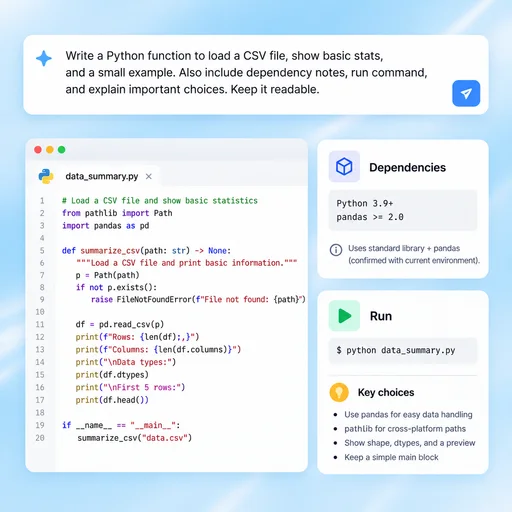
Verification
Start with small fixtures and review edge cases, permissions, and failure behavior. Use copies or dry runs for risky operations and inspect the output before production use.
Try Now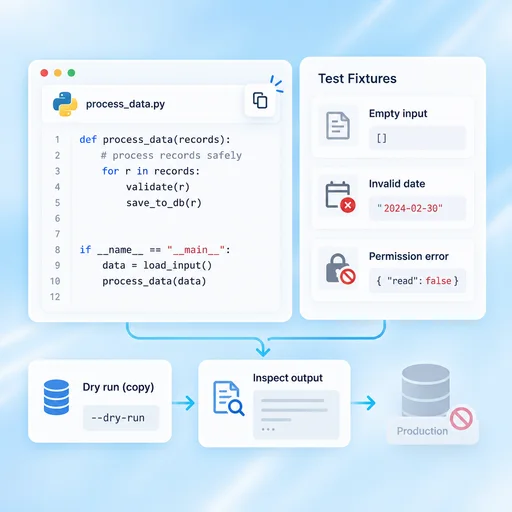
A comparison of working approaches, not a measured performance claim. Review the output before using it.
Start with the right inputs and keep a human review before the final handoff.
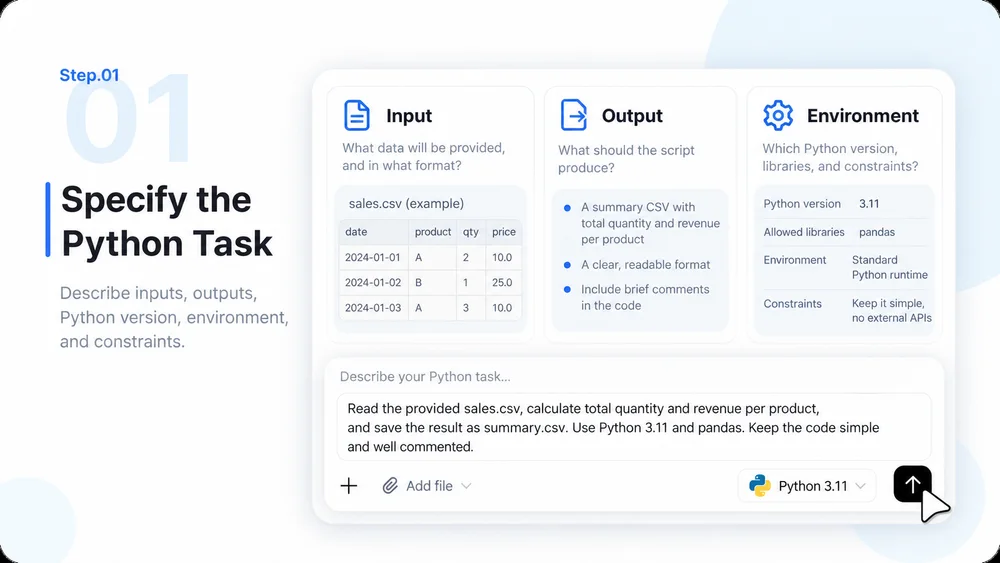
Describe inputs, outputs, Python version, environment, and constraints. Include a small non-sensitive example.
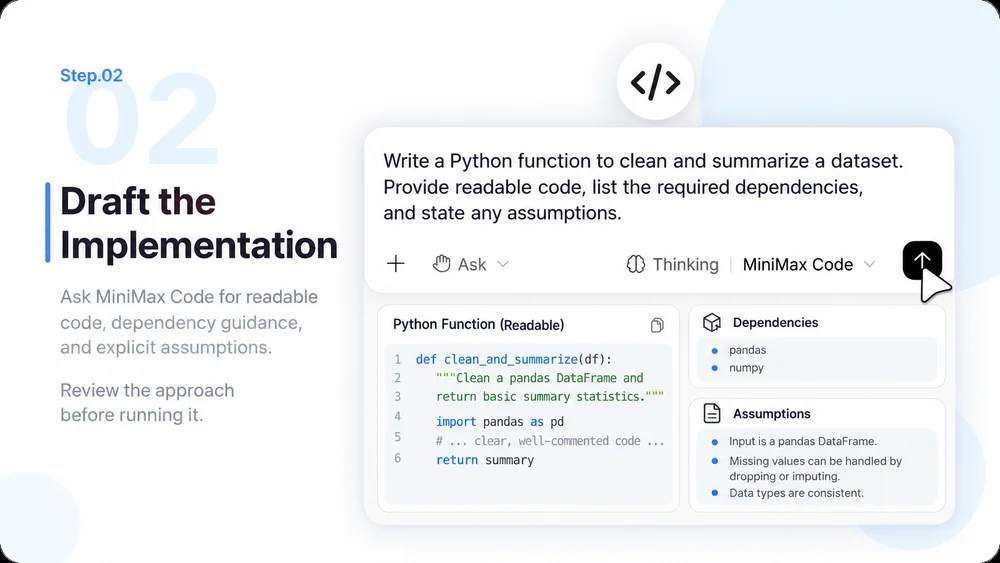
Ask MiniMax Code for readable code, dependency guidance, and explicit assumptions. Review the approach before running it.
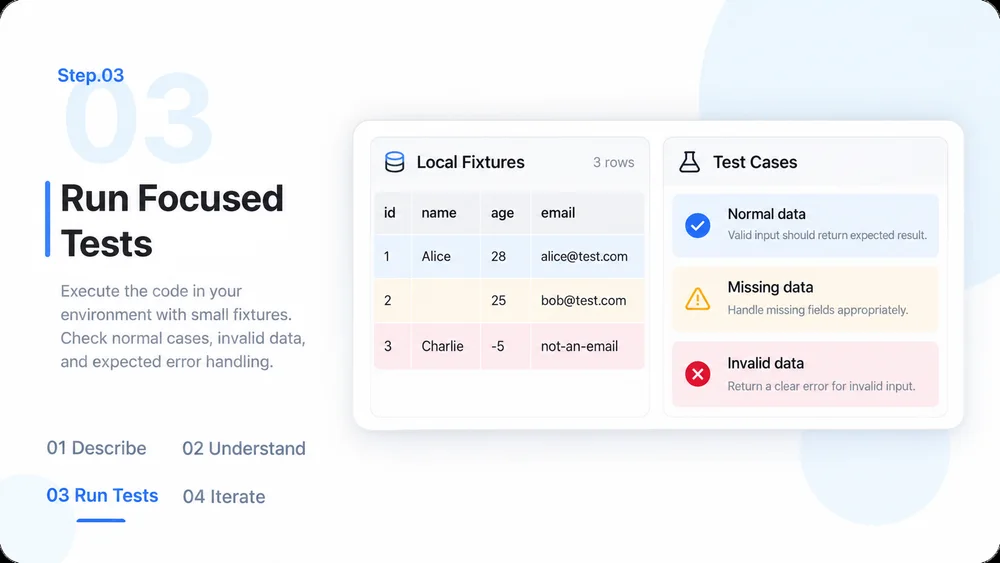
Execute the code in your environment with small fixtures. Check normal cases, invalid data, and expected error handling.
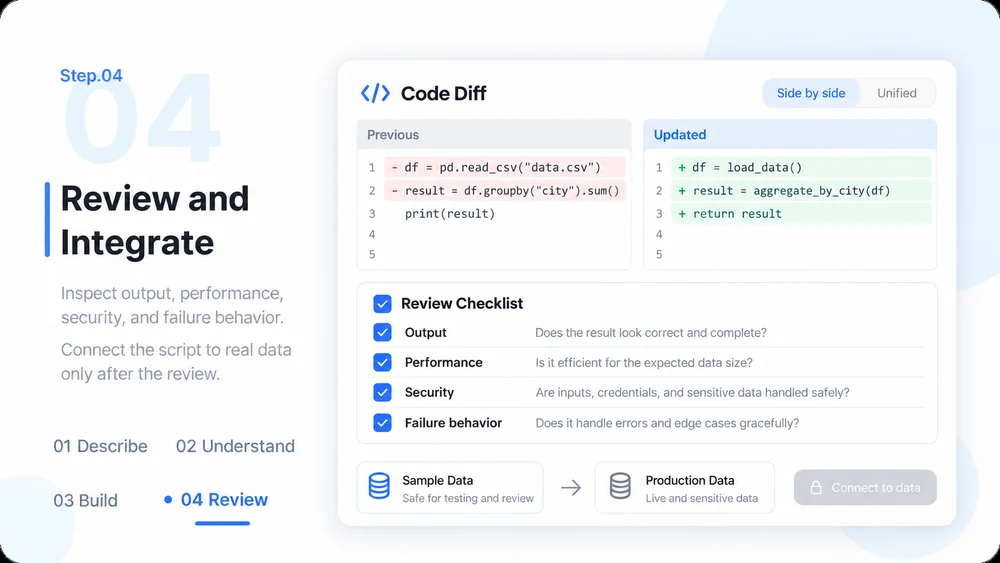
Inspect output, performance, security, and failure behavior. Connect the script to real data only after the review.
Practical answers about inputs, scope, review, and where the work happens.