AI Research Assistant for Questions You Can Verify

Start with a question, scope, and evidence standard. MiniMax Code helps organize sources into a research brief that separates supported findings, conflicting accounts, and open questions.

Start with a Research Question

Choose a sample or describe your research workflow, then continue in MiniMax Code.

Sample prompts

Explore Four AI Research Assistant Examples

Each example starts from verifiable material and a clear brief. Choose a prompt, then adapt it to your own requirements.

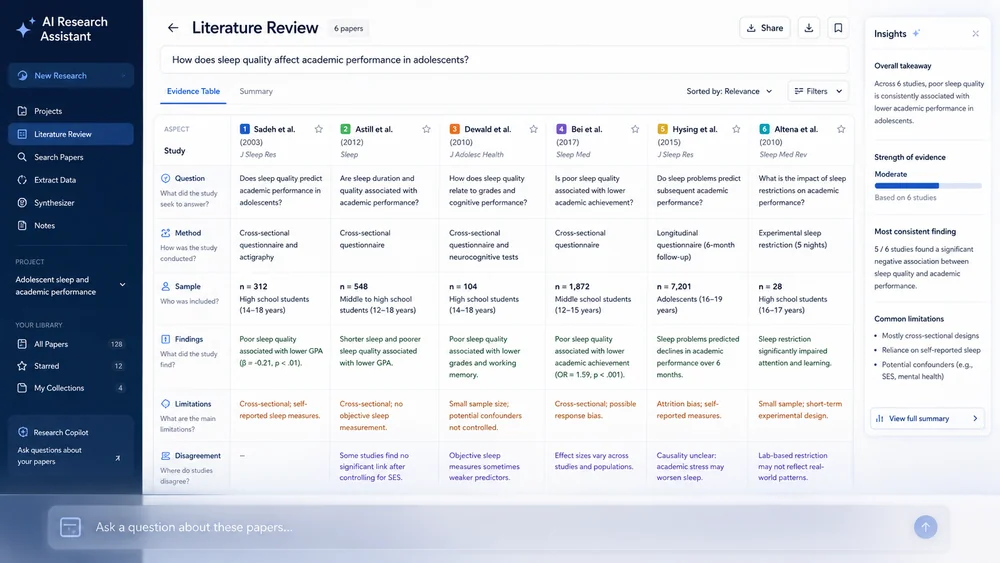
Illustrative literature review created from a focused brief.

A thematic synthesis of supplied papers with methods, findings, limitations, and disagreements kept visible.

Move from Questions to Traceable Research

Build an answer whose sources and limitations are as clear as its conclusions.

Question Design

Define the Scope Before Searching

Clarify the decision, evidence standard, dates, geography, exclusions, and deliverable before collecting material. Specify whether you need a quick landscape, literature review, or decision brief so source selection matches the depth of the task. When comparing many companies, products, or papers, split the work into consistently scoped items and agree on the same evidence fields before synthesis.

Try Now
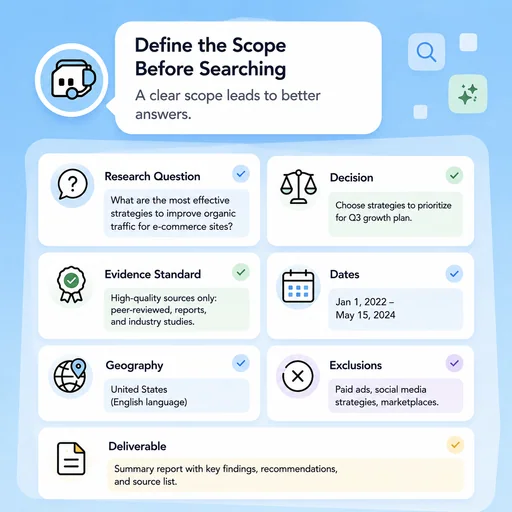
Illustrative workflow for define the scope before searching.

Source Discipline

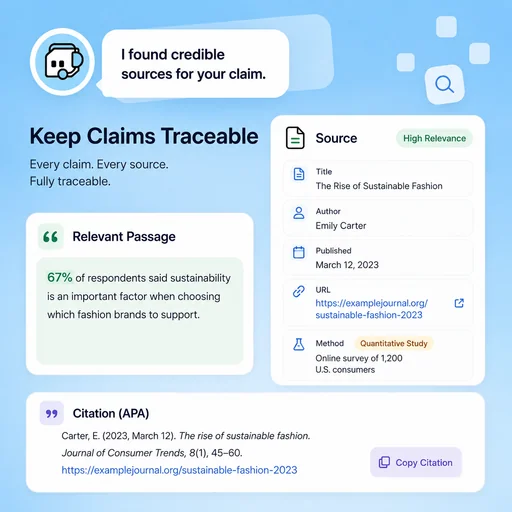
Keep Claims Traceable

Record source title, author, date, URL, method, and relevant passage so reviewers can verify each claim. Prefer original publications where available and check whether a cited passage actually supports the claim, not just the topic.

Try Now
Illustrative workflow for keep claims traceable.

Synthesis Review

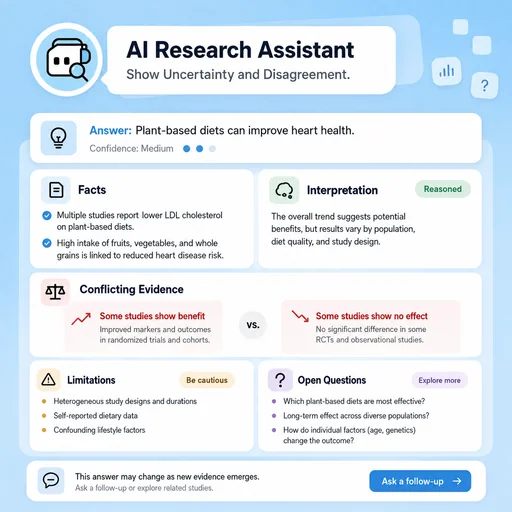
Show Uncertainty and Disagreement

Separate fact, interpretation, and open questions instead of flattening conflicting evidence into one answer. Keep an evidence table with opposing findings and explain which additional source or test would resolve the disagreement.

Try Now
Illustrative workflow for show uncertainty and disagreement.

Keep the Entire Workflow Connected

A workflow comparison, not a performance benchmark. Important facts and final results still need human review.

Working Manually

Planning
Organize material separately
Multi-item research
Research each item in separate notes with different detail
Review
Track issues manually
Research scope
Decide which questions and sources to include
Evidence traceability
Track claims and references in separate notes
Conflicting findings
Reconcile differences across documents

With MiniMax Code

Planning
Structure the brief and sources
Multi-item research
Use a shared evidence template before combining item-level findings
Review
Prepare review and handoff checks
Research scope
Turn the brief into inclusion criteria and a research outline
Evidence traceability
Organize source-linked claims and flag missing support
Conflicting findings
Compare methods, dates, and uncertainty without forcing consensus

Complete a Research Brief in Four Steps

Start with a focused brief, create a reviewable draft, and validate the result before delivery.

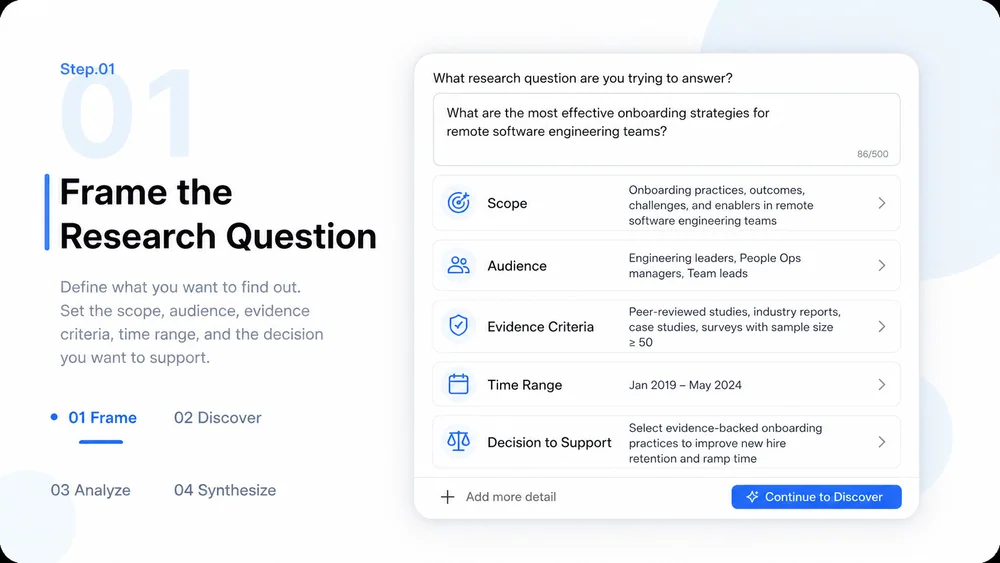
  1. Step.01

    Frame the Research Question

    Define scope, audience, evidence criteria, time range, and the decision the research should support.

    AI Research Assistant workflow, step 1: Frame the Research Question.
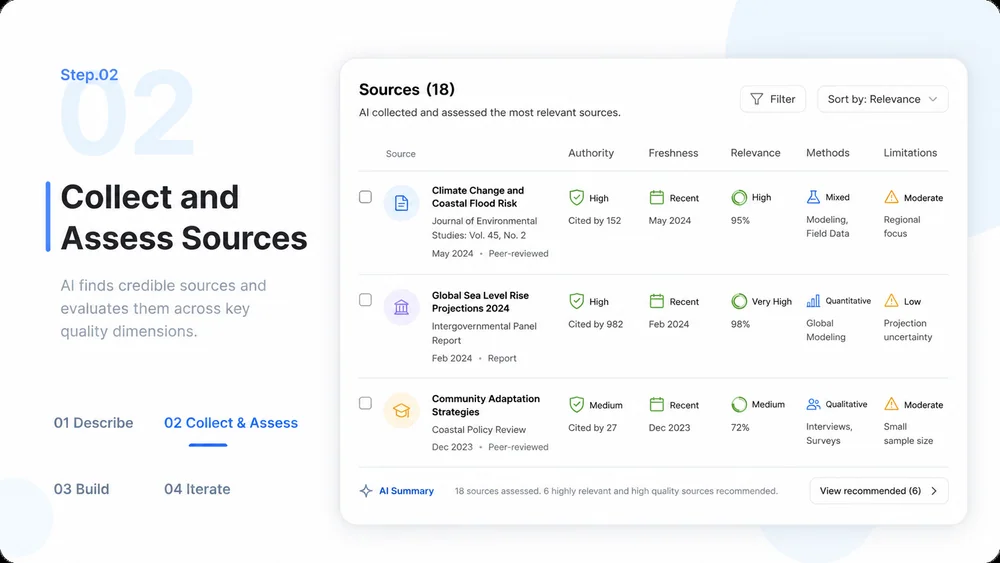
  2. Step.02

    Collect and Assess Sources

    Provide or gather permitted sources, record metadata, and evaluate authority, freshness, relevance, and limitations.

    AI Research Assistant workflow, step 2: Collect and Assess Sources.
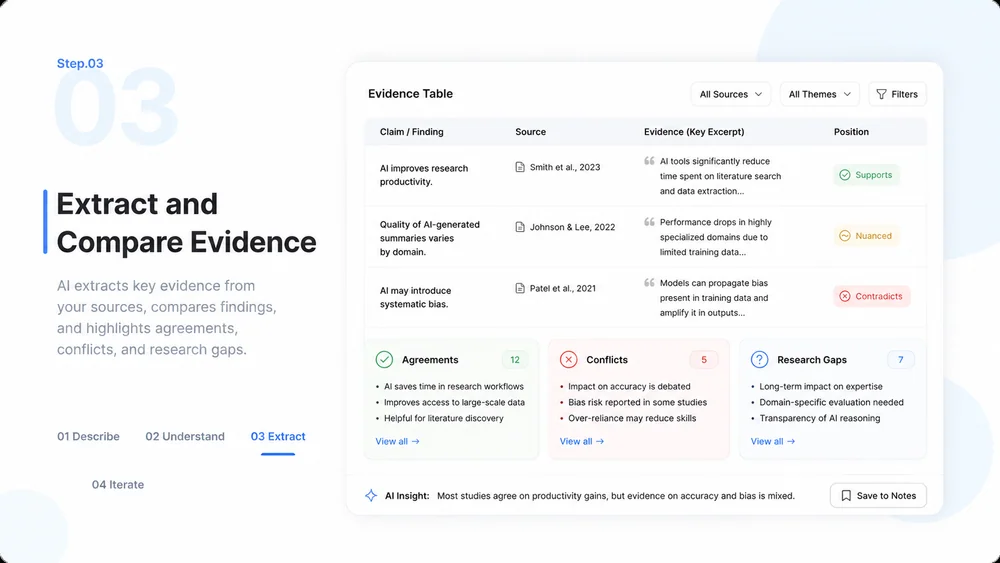
  3. Step.03

    Extract and Compare Evidence

    Build a structured evidence table, compare claims, and identify agreements, conflicts, and gaps.

    AI Research Assistant workflow, step 3: Extract and Compare Evidence.
  4. Step.04

    Synthesize with Citations

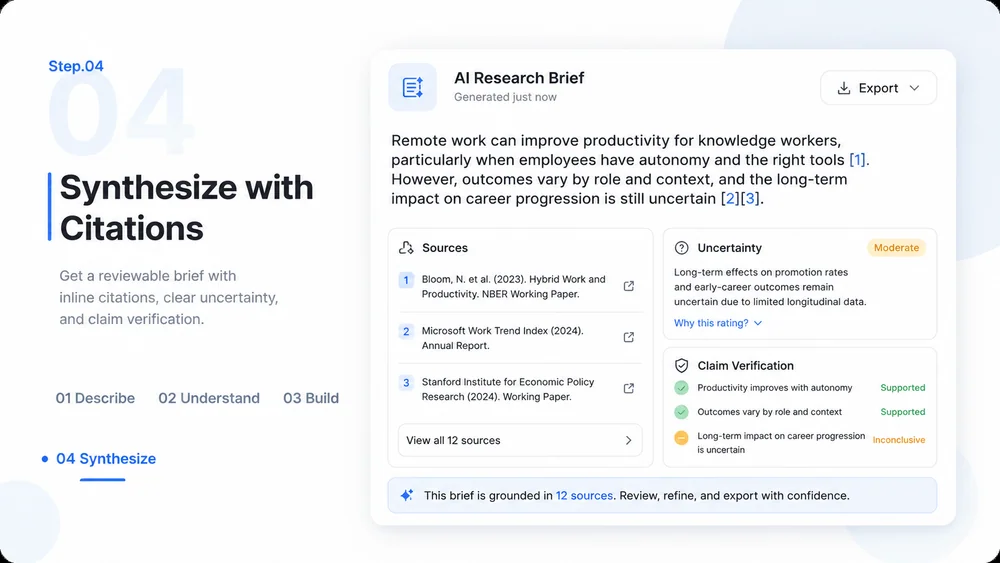
    Draft the brief, attach citations, disclose uncertainty, and verify each material claim before delivery.

    AI Research Assistant workflow, step 4: Synthesize with Citations.

AI Research Assistant FAQs

What to prepare, where the work happens, and what still needs review.

Start Your Next Research Brief with Clear Evidence